
...Gay Xmas!
On the cusp of London's Gay Pride celebrations tomorrow, we have a visitor from across the channel to the Dolores Delargo Towers Museum of Camp...
Zut Alors!

CAMP: "A cornucopia of frivolity, incongruity, theatricality, and humour." "A deadly, winking, sniggering, snuggling, chromium-plated, scent-impregnated, luminous, quivering, giggling, fruit-flavored, mincing, ice-covered heap of mother love." "The lie that tells the truth." "Ostentatious, exaggerated, affected, theatrical; effeminate or homosexual; pertaining to or characteristic of homosexuals."
...Gay Xmas!
On the cusp of London's Gay Pride celebrations tomorrow, we have a visitor from across the channel to the Dolores Delargo Towers Museum of Camp...
Zut Alors!


From Vintage Everyday:
These photos belonged to an Englishman by the name of Richard Colley, known as 'Dick' or 'Dickie' to his many friends. Most of photos are dated from 1922 to 1925, some others are dated 1932 and 1933.Richard Colley enjoyed a privileged lifestyle of holidays, afternoon parties, receptions and costumed balls, interspersed with trips to the races and to the theatre. Many of his friends in the album are unidentified, but it is clear that he knew Dorothy Gish, Gaby Deslys, Harry Pilcer, Beatrice de Bourbon, and the former Queen of Italy.
It is possible that he himself enjoyed a brief career as a dancer or in silent films.
He evidently loved dressing-up!


Fab-u-lous, indeed!
A perfect example of why LGBT History Month is so important.
“To be ignorant of what occurred before you were born is to remain always a child. For what is the worth of human life, unless it is woven into the life of our ancestors by the records of history?” – Cicero
[click any photo to enlarge]

...but what to take, and what to leave behind?


Decisions, decisions.
Of course.
[click any pic to enlarge]



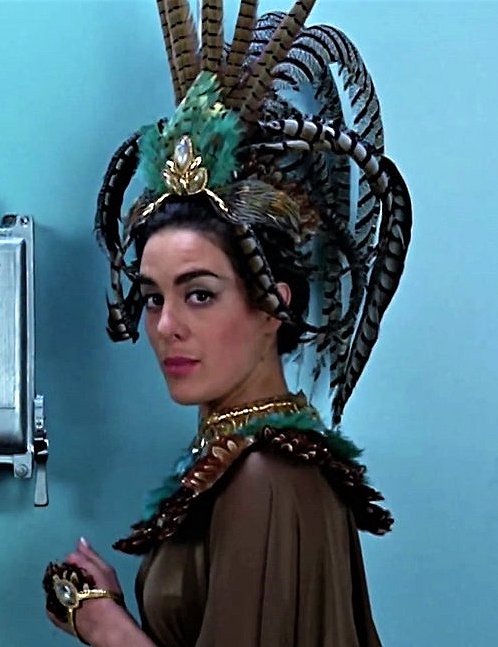


...After the [Spanish] conquest, Cortés sent crates of Aztec feather-work to the king of Spain, along with codices tallying the birds and the down collected. The most beautiful pieces made their way across Europe, enthralling Albrecht Dürer and the Holy Roman Emperor, among others. In France, a taste for feathered hats took hold under Louis XIV and quickly grew into a craze. Ostrich feathers were shipped in from Algeria, Tunisia, Egypt, and Madagascar, and dyed black, green, lilac, rose, sky blue, and yellow; heron feathers were brought from Germany and Turkey to adorn the Knights of the Holy Spirit. “The madness for feathers has reached a point of excess one never could have suspected,” the journalist Louis-François Métra wrote in the winter of 1775. “Hats that would have seemed ridiculously tall a few months ago no longer suffice.”

Prompted by Marie Antoinette, who doubled the height of her feathered hat for a ball thrown by the Duchess of Chartres, women were soon wearing hats as high as two and three feet. Arguments broke out at the opera, where viewers could no longer see the stage, and the finest ladies were forced to kneel in their carriages to clear the ceiling, or else stick their heads out the window. “When a woman thus coiffed dances at a ball, she is compelled to continually bend down as she passes beneath the chandeliers,” the Count of Vaublanc noted in his diary. “It is the most graceless thing imaginable.”
Paris had twenty-five master plumassiers at the end of the seventeen-hundreds. A century later, it had hundreds, making fabrics for Hermès, the Folies-Bergère, and the Moulin Rouge.

In London, the feather market went through nearly a third of a million egrets in 1910 alone. In New York, Hanson writes, a bird-watcher named Frank Chapman counted more than forty species of feathers on women’s hats on a single walk, and those were only from native birds. Some ladies had taken to wearing whole birds on their heads by then - an economical choice, given that feathers were more costly, by weight, than anything but diamonds. Among the treasures that went down with the Titanic were more than forty cases of feathers, worth upward of 2.3 million in today’s dollars.


