
Anna Wintour and Meryl Streep wearing Prada on the cover of Vogue. [Photograph: Annie Leibovitz/Vogue - click to enlarge]

CAMP: "A cornucopia of frivolity, incongruity, theatricality, and humour." "A deadly, winking, sniggering, snuggling, chromium-plated, scent-impregnated, luminous, quivering, giggling, fruit-flavored, mincing, ice-covered heap of mother love." "The lie that tells the truth." "Ostentatious, exaggerated, affected, theatrical; effeminate or homosexual; pertaining to or characteristic of homosexuals."
Anna Wintour and Meryl Streep wearing Prada on the cover of Vogue. [Photograph: Annie Leibovitz/Vogue - click to enlarge]

That time of year thou mayst in me behold
When yellow leaves, or none, or few, do hang
Upon those boughs which shake against the cold,
Bare ruin'd choirs, where late the sweet birds sang.
In me thou see'st the twilight of such day
As after sunset fadeth in the west,
Which by and by black night doth take away,
Death's second self, that seals up all in rest.
- William Shakespeare, from Sonnet 73
It's all over for another year - British Summer Time is ended.
No light evenings until next March...
Sob.


"Style doesn't have seasons.""You have to want to dare being a model. You have to dare or you don't go that step further. You have to be willing to stretch - and to not only be willing to stretch, but to want to stretch."
"A lot of women say to me, 'Polly, why aren't there more clothes out there that we can wear?' And I don't agree with them! There are clothes out there that they can wear - it's just that they don't dare to wear them."
"I personally do not think that I have ever done, in my working life, anything vulgar. I know I've done provocative things."
"I like to take things further. Too often, stylists do things to please because they are going to be accepted. You lose the magic that way. You can’t give something special to your readers unless you dare. I was a stronger woman behind the camera than I was in real life. I dared."
And so, farewell, the remarkable stylist and fashion editor Polly Mellen, who has departed to zhoosh-up the glittering catwalks of Fabulon at the venerable age of 100.
Unsurprisingly, during her long career in the fashion world she knew everyone who was everyone - growing up in Connecticut, she was acquainted with the young Katherine Hepburn; a friend-of-a-friend Sally Kirkland (future editor of Vogue) recommended her to Diana Vreeland, who gave Miss Mellon her big break at Harpers Bizarre, and then Vogue; she worked with photographers Helmut Newton and Irving Penn, and her collaborations with Richard Avedon became iconic; she worked with just about every couturier from Cristóbal Balenciaga to Halston to Alistair McQueen, Calvin Klein, Isaac Mizrahi, Vera Wang and Viktor & Rolf, and nurtured the careers of a host of supermodels that included Penelope Tree, Patti Hansen, Lauren Hutton, Nastassja Kinski, Janice Dickinson, Kate Moss, Linda Evangelista, and dozens more.
A most influential fashionista, indeed!
RIP, Polly Allen Mellen (18th June 1924 – 12th December 2024)


The inimitable Miriam Margolyes appears on the cover of British Vogue as part of its Pride 2023 issue.
In her own words:
“Gay people have the luck to be able to fashion the relationship they want. It’s much more flexible for us,” she says. “I think we have more freedom than [straight people] do. Particularly gay boys, they’re always fucking everything. It’s amazing. I don’t know how they get away with it.”Although she loves to see the “uninhibited young enjoying themselves”, she’s never been one for Pride marches. “I actually find lesbians a bit on the boring side, because they’re a bit heavy-handed about it all,” she says, deadpan. Still, she has always been proudly lesbian. “I think gay people are very lucky, because we are not conventional, we are a group slightly apart. It gives us an edge. We’re good artists, we’re good musicians. And I like being gay. I wouldn’t want to be straight for anything.”
Amen, sister!
Read the full article. It's a hoot!
[click any image to enlarge]
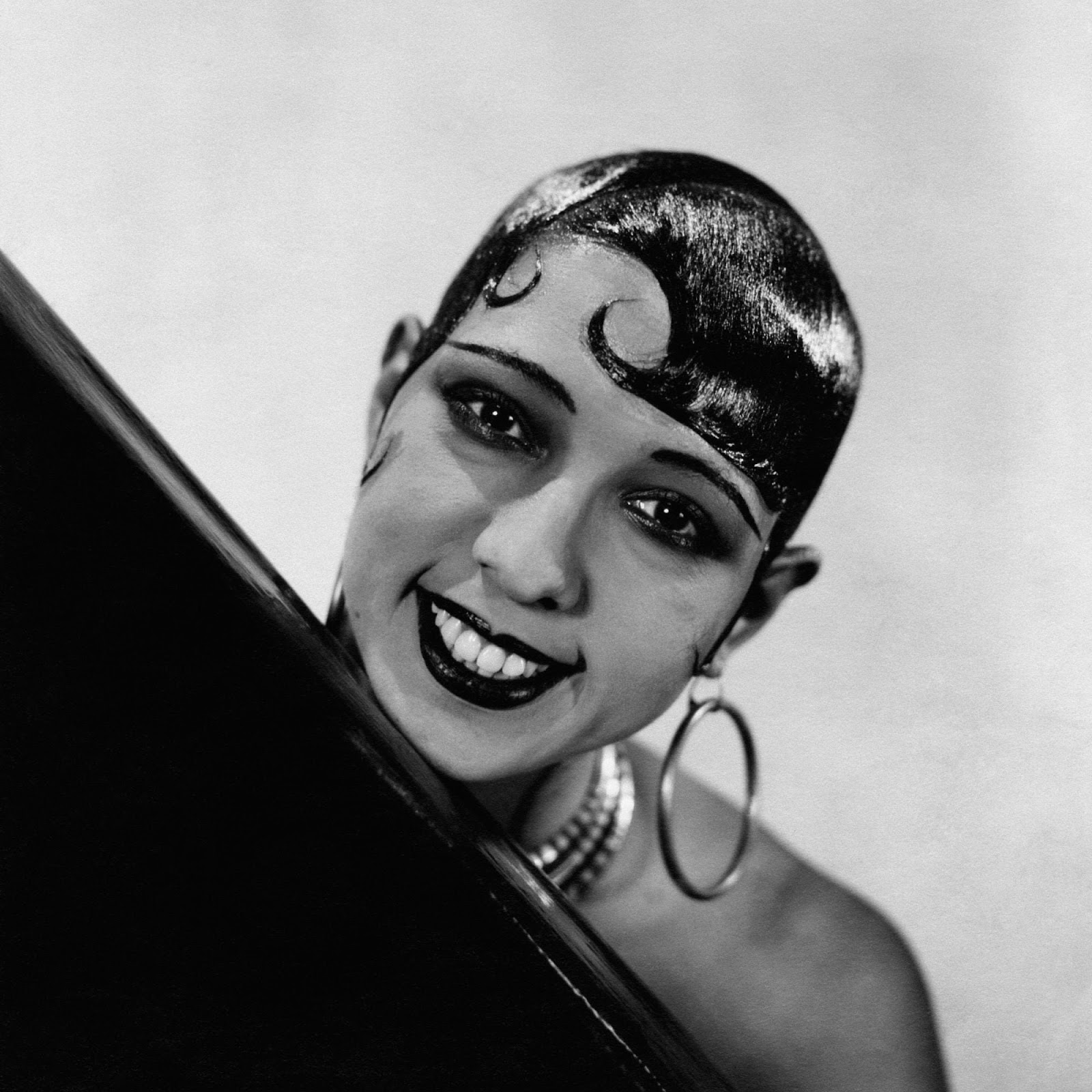
From the foreword by Dame Anna Wintour:
Brilliance and bravery. Those are my impressions from Chronorama: Photographic Treasures of the 20th Century that tells a story of the better part of a century through people, places, fashion, culture, and art. The word “brilliance” comes to mind because this is the work of the best photographers of our age. Steichen, Penn, Horst, Beaton, Newton, Elgort, Miller, and so many others – their names are as iconic as the cultural figures they captured.
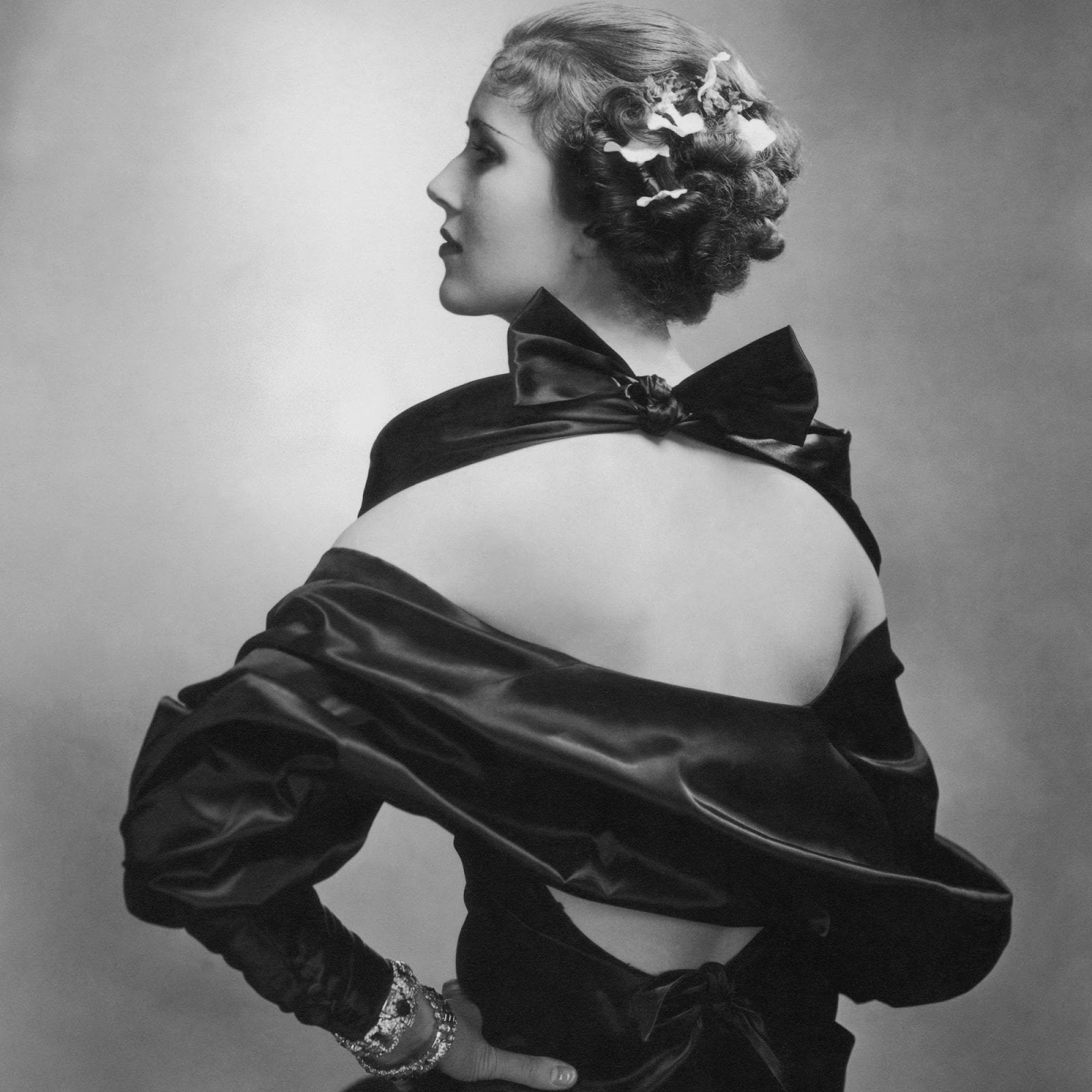
Edward Steichen's Mary Heberden wearing a satin dress (1935) for Vogue
But I also think of bravery because these are magazine pictures. Photographs commissioned by editors to run in the pages of Vogue, Vanity Fair, House & Garden, GQ, Mademoiselle, and Glamour – Condé Nast magazines with a wide and varied readership. Each photograph is therefore an act of journalism: this person represents our moment, these clothes tell us about the time we’re in, this building or object explains our era.

Bert Stein's Twiggy (1967) for Vogue
Is journalism art? Of course, and every page of Chronorama puts that question to rest. But magazine pictures are also something slightly to the side of art, and that is why they seem so brave to me. To tell the story of the moment you’re in is not always an easy thing. Who is relevant? What matters now? What is happening? The answers can set off a storm of debate.
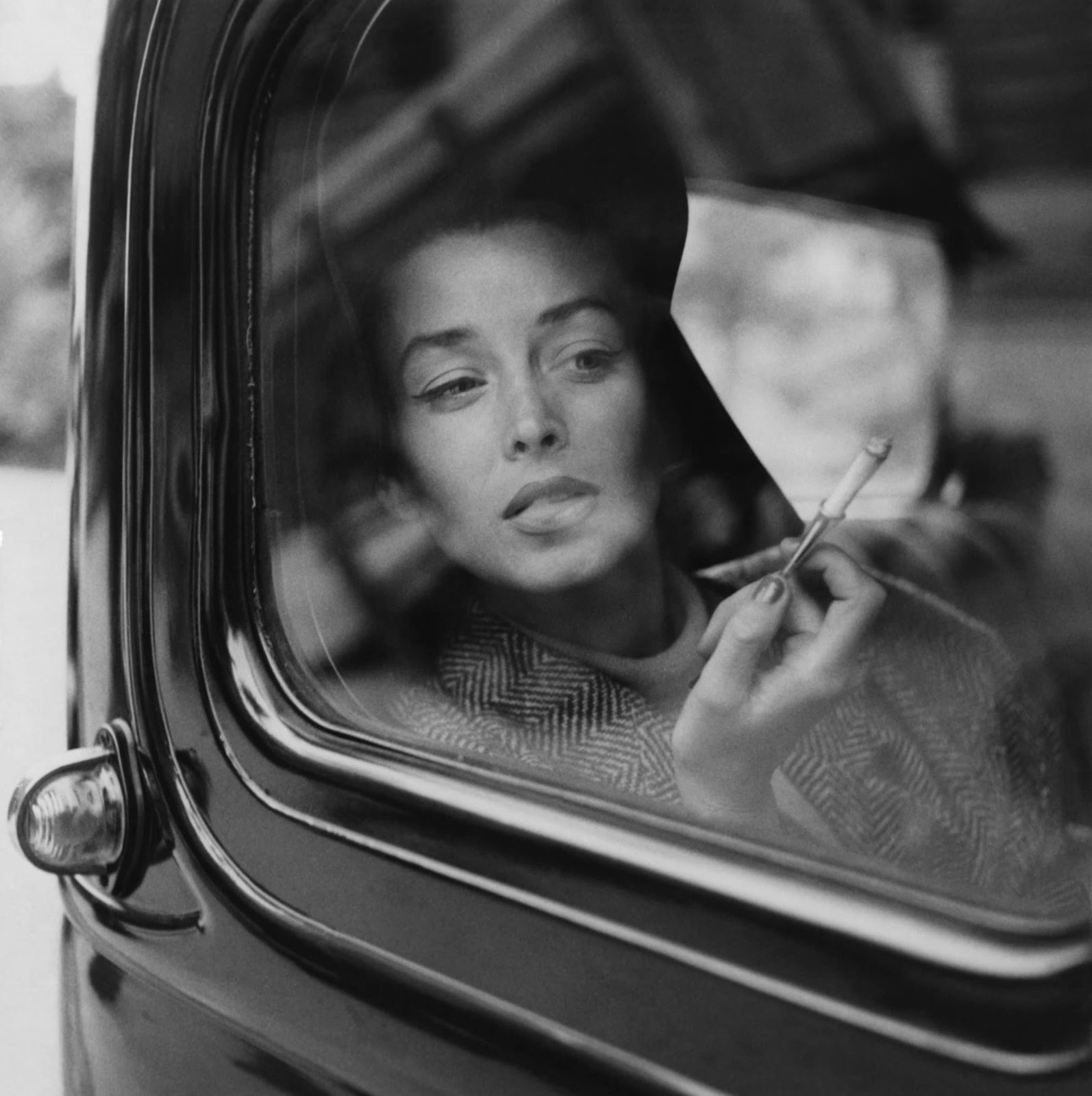
Suzy Parker's Snapshot of her famous sister Dorian Leigh (1954) for Vogue
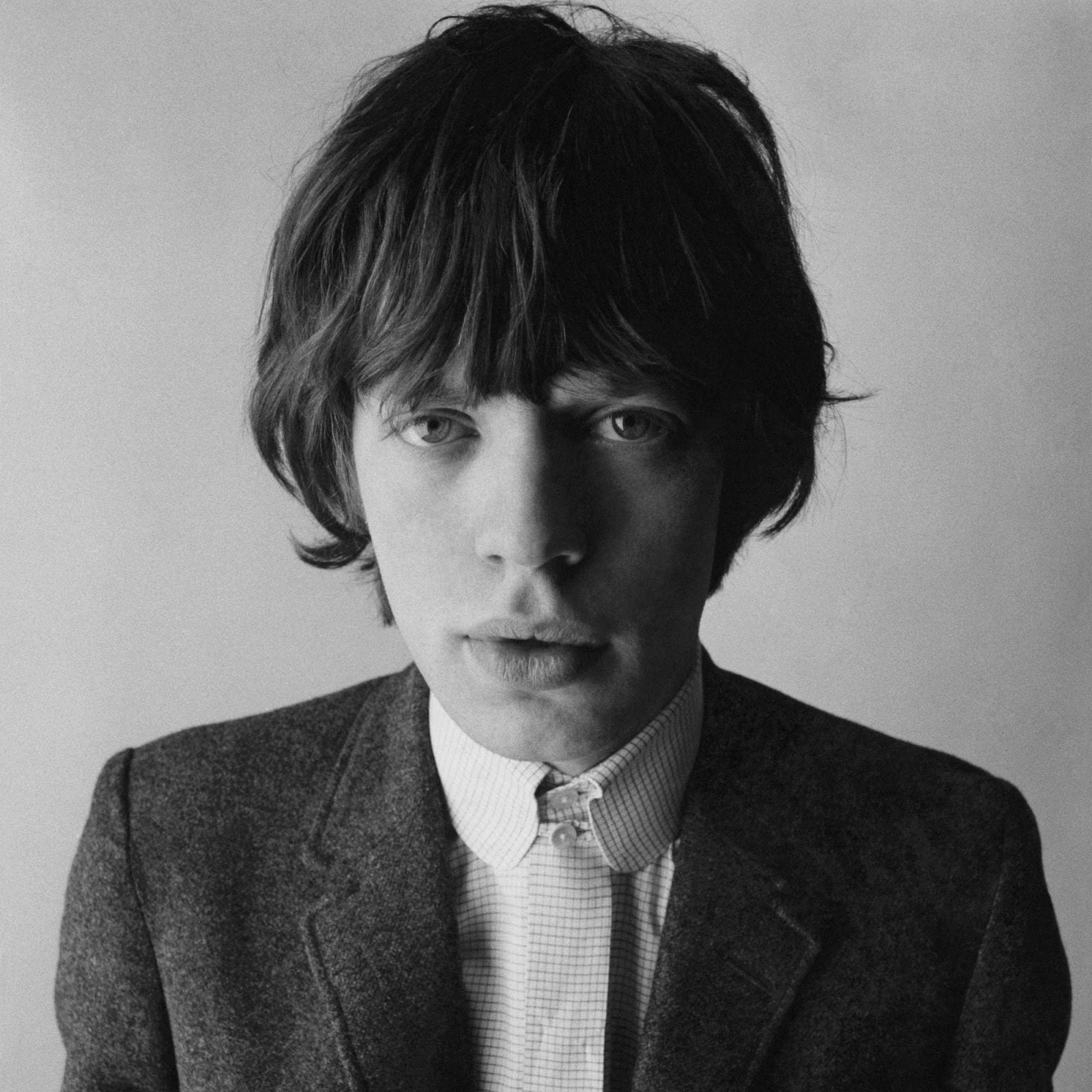
Mick Jagger (1964) by David Bailey for Vogue
The editors behind these photographs, everyone from Edna Woolman Chase to Frank Crowninshield to Grace Mirabella to Alexander Liberman, Condé Nast’s legendary editorial director, made wonderful choices. The people here do define the century, from Charlie Chaplin to James Joyce to Henri Matisse to Ernest Hemingway, Mick Jagger, Catherine Deneuve, Karl Lagerfeld, Richard Avedon, Arthur Ashe, Twiggy, Veruschka, and so many others. The settings and fashion are profoundly chic.
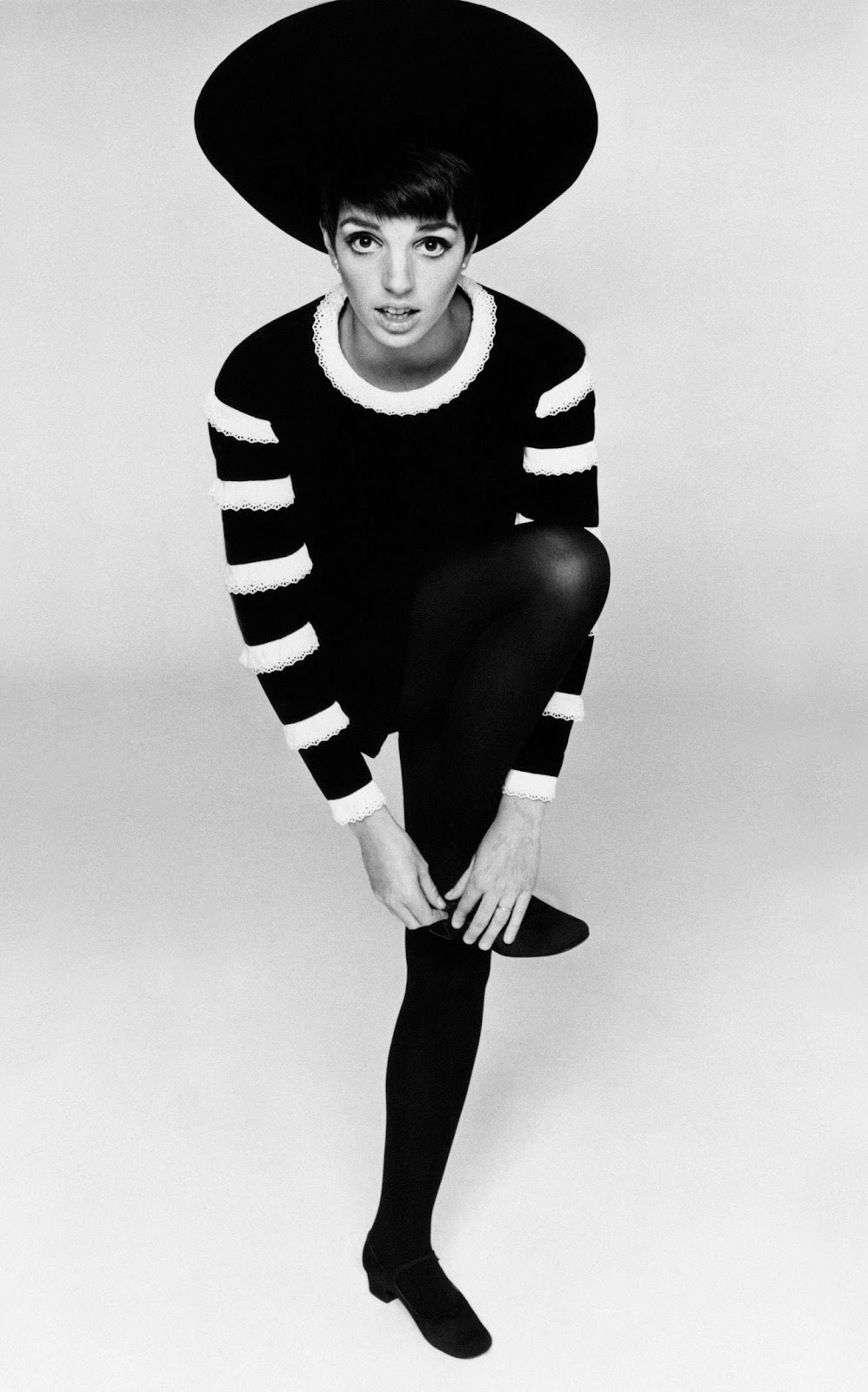
Liza Minnelli (1967) by Alexis Waldeck for Vogue
It is impossible to pick favorites among the pages of Chronorama, but I will say this: the bravest pictures, the controversial ones, have uncommon power. Think of Helmut Newton’s “Story of Ohhh…” from 1975, a portfolio so sexually liberated that Vogue readers were aghast. Or the Deborah Turbeville bathhouse photographs from the same issue, as unsettling and allusive as they are glamorous. Or any one of Irving Penn’s unrelenting, uncompromising images with their classical, modernist style. In the 1950s, Vogue editors apparently fretted that his pictures were too much: “They burn the page,” they said. They certainly do.
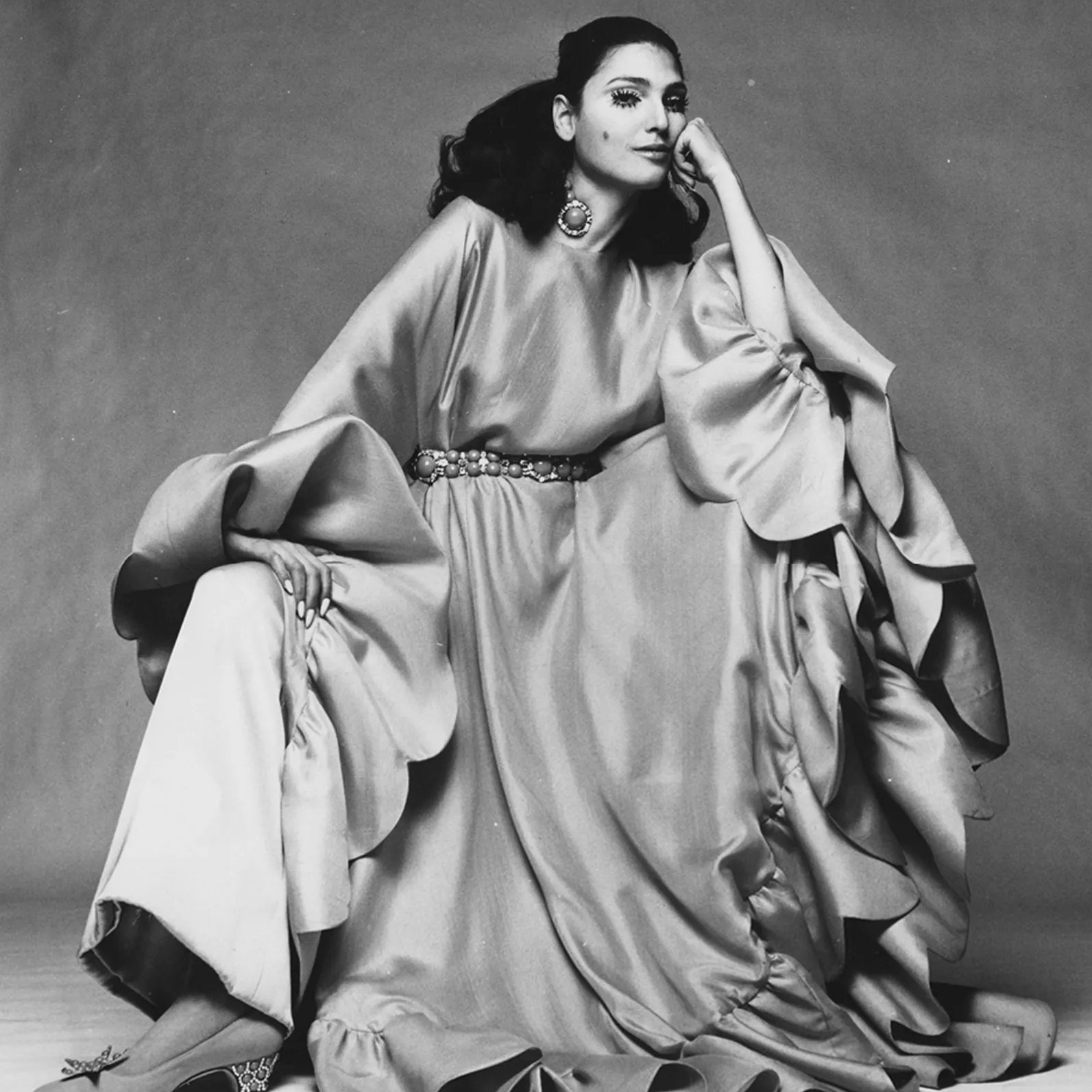
Benedetta Barzini (1969) by Gian Paolo Barbieri for Vogue
I like to look forward, not back, but seeing these photographs, I find myself a little nostalgic for a different age, warmly recalling how, when I came to Vogue, Mr Penn would photograph models with barely anyone around him, only him, a Vogue editor, and the smallest of teams. I think of photographers disappearing for weeks and coming back with pictures that astonished me and frightened me too. Every editor knows the experience: the recognition of risk and the knowledge that no other choice will do.
Chronorama: Photographic Treasures of the 20th Century is published on 30th March 2023.

Spring
By Christina Rossetti
Frost-locked all the winter,
Seeds, and roots, and stones of fruits,
What shall make their sap ascend
That they may put forth shoots?
Tips of tender green,
Leaf, or blade, or sheath;
Telling of the hidden life
That breaks forth underneath,
Life nursed in its grave by Death.
Blows the thaw-wind pleasantly,
Drips the soaking rain,
By fits looks down the waking sun:
Young grass springs on the plain;
Young leaves clothe early hedgerow trees;
Seeds, and roots, and stones of fruits,
Swollen with sap put forth their shoots;
Curled-headed ferns sprout in the lane;
Birds sing and pair again.
There is no time like Spring,
When life’s alive in everything,
Before new nestlings sing,
Before cleft swallows speed their journey back
Along the trackless track –
God guides their wing,
He spreads their table that they nothing lack, –
Before the daisy grows a common flower
Before the sun has power
To scorch the world up in his noontide hour.

From the Bilingual by Music website:
Midsummer's Day is one of the most important holidays of the year in Sweden, and probably the most uniquely Swedish in the way it is celebrated.How bizarre.
Raising and dancing around a midsommarstång pole is an activity that attracts families and many others. Before the maypole is raised, greens and flowers are collected and used to cover the entire pole. People dancing around the pole listen to traditional music and sing songs associated with the holiday. Some wear traditional folk costumes or crowns made of wild springs and wildflowers on their heads.
Music plays a big part at the Midsummer celebrations. The most famous song sung when dancing around the maypole is Små grodorna [which in English is “Little frogs”].[Click here for footage of that.]
The melody originates from a military march from the French revolution La Chanson de l’Oignon (“The onion song”),with the chorus “Au pas, camarade, au pas camarade / au pas, au pas, au pas!” (“In step, comrade”). The enemies of the French at the time, the British, changed the text with condescending irony to “Au pas, grenouilles!” (“In step, little frogs”).
Små grodorna in Swedish:
Små grodorna, små grodorna är lustiga att se.
Små grodorna, små grodorna är lustiga att se.
Ej öron, ej öron, ej svansar hava de.
Ej öron, ej öron, ej svansar hava de.
Kou ack ack ack, kou ack ack ack,
kou ack ack ack ack kaa.
Kou ack ack ack, kou ack ack ack,
kou ack ack ack ack kaa.
English version (direct translation):
The little frogs, the little frogs are funny to observe.
The little frogs, the little frogs are funny to observe.
No ears, no ears, no tails do they possess.
No ears, no ears, no tails do they possess.
Kou ack ack ack, kou ack ack ack,
kou ack ack ack ack kaa.
Kou ack ack ack, kou ack ack ack,
kou ack ack ack ack kaa.
However one chooses to celebrate, it is worth doing - for after today, the nights start drawing in once more...

Winter Eyes
by Douglas Florian
Look at winter
With winter eyes
As smoke curls from rooftops
To clear cobalt skies.
Breathe in winter
Past winter nose:
The sweet scent of black birch
Where velvet moss grows.
Walk through winter
With winter feet
On crackling ice
Or sloshy wet sleet.
Look at winter
With winter eyes:
The rustling of oak leaves
As spring slowly nears.
Oh, how I love that last thought - for today is indeed the nadir of the year; the longest night - and everything from here on in will be getting lighter again...

Fall, leaves, fall; die, flowers, away;
Lengthen night and shorten day;
Every leaf speaks bliss to me
Fluttering from the autumn tree.
I shall smile when wreaths of snow
Blossom where the rose should grow;
I shall sing when night’s decay
Ushers in a drearier day.
- Emily Brontë
British Summer Time is officially over. Sob.
No light evenings from now until March...Oh, the horror.

Faded the flower and all its budded charms,British Summer Time is ended.
Faded the sight of beauty from my eyes,
Faded the shape of beauty from my arms,
Faded the voice, warmth, whiteness, paradise –
Vanish’d unseasonably at shut of eve,
When the dusk holiday – or holinight
Of fragrant-curtain’d love begins to weave
The woof of darkness thick, for hid delight


