Mister Acker Bilk would have celebrated his 90th birthday today.
To experience his musical genius, see my blog post on the occasion we bade the great man farewell.

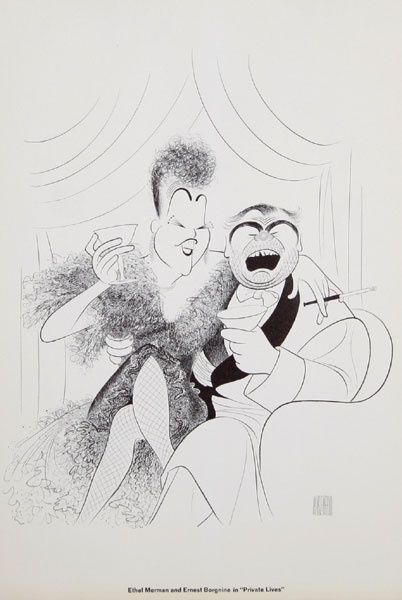
CAMP: "A cornucopia of frivolity, incongruity, theatricality, and humour." "A deadly, winking, sniggering, snuggling, chromium-plated, scent-impregnated, luminous, quivering, giggling, fruit-flavored, mincing, ice-covered heap of mother love." "The lie that tells the truth." "Ostentatious, exaggerated, affected, theatrical; effeminate or homosexual; pertaining to or characteristic of homosexuals."

From foundation, the Bauhaus saw itself as a part of the modern movement and as its mediator. Created from the migration of artists and ideas, it developed in constant interaction with various groups of architects, urban planners, artists, scientists and designers. The constitutive ideas of the Bauhaus come from the Arts and Crafts Movement of the prewar period, especially the progressive education movement and the concept of the Gesamtkunstwerk (total work of art) that unites all of the arts as well as aesthetic education in all areas of life as represented by the Deutscher Werkbund (German Work Federation) and Art Nouveau...But, as they say, "all work and no play makes Jack a dull boy". And in the hands of Oskar Schlemmer (Master of the mural-painting and sculpture departments at the Bauhaus), the enthusiasms of the students "at play" certainly knew no bounds...
...The return to craftsmanship was not connected with the intention of creating industrialised reproductions of past styles that evolved from craftsmanship but with the development of a new formal vocabulary based on experimentation and craftsmanship that would do justice to the industrial manufacturing process...
...The artist William Morris (1834–1896) was the founder and leader of a reform movement that aspired to counter the cultural damage caused by industrialisation. Starting in 1861, he revived historic handicraft techniques in his workshops and used them to produce high quality goods such as fabrics, carpets, glass paintings, furniture and everyday objects. In his own publishing company, Kelmscott Press, he produced books that paved the way for Art Nouveau.
Morris triggered a wave of reform that was to reach Germany later, where industrialisation had achieved a new quality after the foundation of the German Reich in 1871. Germany also recognised that well-designed industrial products represented a significant economic factor. The British educational system was analysed in order to reform the German schools of arts and crafts. An entire generation of painters now understood that the applied arts were their most important task. The Dresden Workshops (1898), whose ‘machine furniture’ was designed by Richard Riemerschmid, are the best-known example of the many workshops established on German soil. In 1903, the Wiener Werkstätte (Viennese Workshop) was established in Austria with Josef Hoffmann and Koloman Moser as its most important representatives.
The Weimar State Bauhaus was founded [in 1919] by Walter Gropius with the goal of overcoming the division between the artisan and the artist. The employees of the Bauhaus wanted to eliminate social differences through their creative work.